

Tudor vs Longines in 2026: Has the Affordable Luxury Crown Shifted?

Tudor reaches its centennial this year, celebrating 100 years since its founding in 1926. Created by Hans Wilsdorf, the entrepreneur also responsible for Rolex, the brand was designed to deliver the dependability, craftsmanship, and prestige associated with Rolex, but at a price point that appealed to a broader market.
The choice of the name “Tudor” was deliberate, drawing inspiration from England’s Tudor era, a period linked with cultural growth, discovery, and transformative progress. In the same spirit, Wilsdorf intended the new company to establish its own lasting legacy within the watch industry.
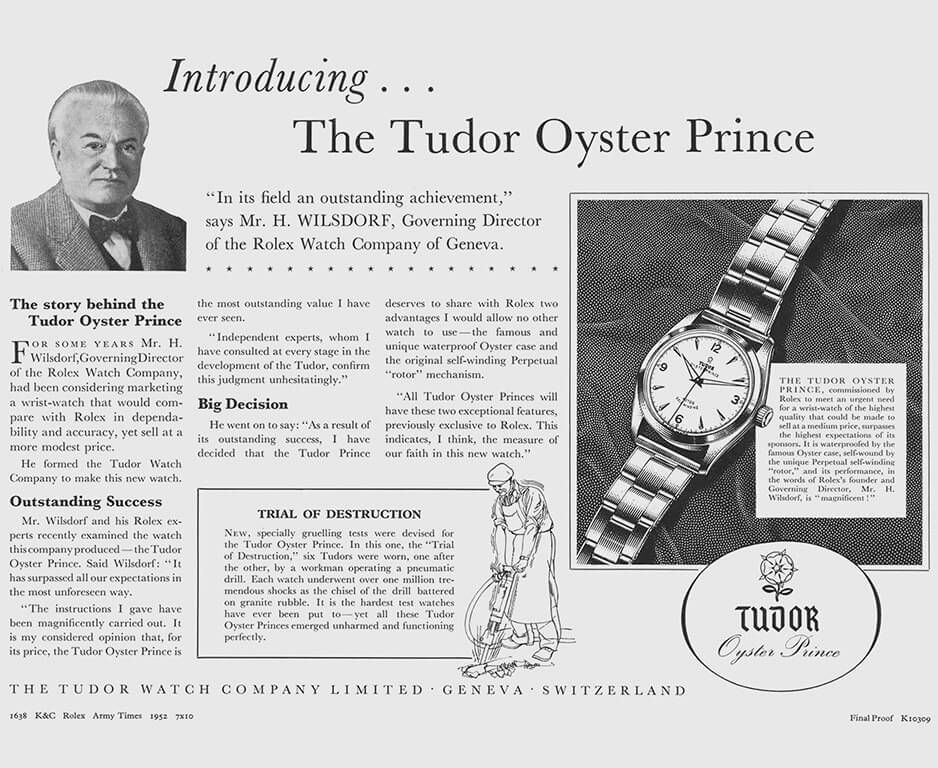
During its formative years, Tudor made use of proven Rolex innovations such as the Oyster case and self-winding Perpetual technology to produce practical daily-wear watches known for their durability and water resistance. Powered by dependable third-party Swiss calibers, these models were straightforward in design, economical to maintain, and built for long-term use. They captured many of the qualities that had made Rolex famous, while making those benefits available to a more accessible audience.
Fast forward to 2026, and the brand strives to maintain that original philosophy, although with far more original manufacturing and design. One such watch line that embodies the new in-house Tudor is the Black Bay. Launched in 2012, the original 41mm Black Bay led the Tudor resurgence, resulting in 39mm and 37mm variants years later. Not to mention the handful of colourways available, all at relatively affordable prices. At least, they were affordable.

Indeed, like many of its competitors, Tudor has steadily raised prices over the past decade. The 41mm Black Bay, which retailed for an approachable $3,600 in 2012, now commands $5,325, albeit with upgrades such as METAS certification and an improved clasp. In doing so, Tudor has shifted away from the position it once occupied in the accessible luxury segment. Rather than competing with truly affordable alternatives like TAG Heuer, Longines, and Oris, it now finds itself moving closer to the ever-more-expensive Omega.
Tudor at Watches & Wonders 2026
However, pricing is only one component of my overall argument. While the brand remains an affordable option compared to Rolex, I’d argue it has lost a bit of its charm, becoming overly reliant on what led it down the path of growth, while failing to offer interesting and innovative new pieces.
At the time of writing, Watches and Wonders is taking place, with luxury watch brands from around the world showcasing a bevy of new models. And while this annual event is typically a moment for brands to push boundaries, experiment, and surprise enthusiasts, Tudor seems to have taken a far more conservative route in recent years.

The latest releases feel iterative rather than innovative. We’re seeing refreshed bracelets, incremental movement upgrades, and the occasional new dial colour, but very little that truly captures attention or shifts the conversation. These are not bad watches by any means. In fact, they remain well-built, reliable, and thoughtfully designed. However, on their 100th anniversary, these releases have been a bit of a letdown.
For a brand that proudly leans on the slogan “Born to Dare,” the current direction feels unusually safe. Where is the risk-taking? Where are the bold design departures or category-defining releases that once helped Tudor carve out its own identity separate from Rolex? Instead, many of the new models feel like careful refinements of existing formulas. Appealing, yes, but predictable.
Enter Longines
Meanwhile, competitors are not standing still. Longines has been quietly but confidently evolving. The brand has sharpened its identity, expanded its catalogue with purpose, and delivered watches that feel both modern and compelling. The latest iterations of the HydroConquest line, for example, strike an impressive balance between design, performance, and value.

The case alone tells the story. It’s slimmer, more ergonomic, and more refined than the outgoing generation, coming in at around 11.7mm thick, with improved curvature that makes it sit better on the wrist. The bezel has also been completely reworked, now featuring a ceramic insert and a far more satisfying, precise action, borrowed from higher-end pieces in Longines’ lineup.
Then there’s the dial, which is arguably the most controversial change. The oversized Arabic numerals that once defined the HydroConquest are gone, replaced by a cleaner, more modern set of applied markers. Some might argue it loses a bit of identity, but what it gains is versatility. It now looks like a watch that can genuinely compete across the entire dive watch segment, rather than sitting awkwardly between sporty and quirky.
Under the hood, the upgrades continue. The new caliber L888.5 brings a silicon balance spring, improved magnetic resistance, and a very respectable 72-hour power reserve. In practical terms, this is exactly what modern buyers want. A robust, reliable, and hassle-free timepiece.
Now, I will be the first to admit that this new direction is not exactly bold. Some have compared this release to the iconic Rolex Submariner, and I can understand that sentiment. However, its design and spec sheet are not the real story. It’s the intent behind the release.
This is a brand actively listening, refining, and pushing forward. The HydroConquest is no longer just a “good value diver.” It’s a genuinely well-thought-out product that feels like it belongs in 2026. It’s cohesive, competitive, and importantly, desirable. Combine this with other recent releases, like the 39mm Spirit Zulu Time and 1925 variants, the lovely Ultra-Chron Classic, and refinements to the Spirit Pilot, and you have a brand that has been hitting it out of the park.
Is Longines the New Tudor?
If Tudor’s strategy lately feels like a masterclass in restraint, it’s also starting to feel a bit… predictable. Polished, yes. Refined, absolutely. But daring? Not quite. For a brand that built its identity on pushing boundaries, leaning this heavily on incremental tweaks risks turning “Born to Dare” into little more than a well-designed slogan.
Longines, to be clear, isn’t out here trying to be wild for the sake of it. Their releases aren’t radical, and they’re not chasing shock value. But what they are doing is far more strategic and arguably more important. They’re evolving. Quietly, deliberately, and with a clear sense of direction, Longines is stepping out of its old role as the “safe, entry-level” pick and moving into something far more competitive.
In many ways, they look like Tudor did ten years ago: focused, hungry, and intent on climbing the ladder rather than just maintaining position. The designs are sharper, the catalogue feels more cohesive, and the ambition is unmistakable. It’s not about being quirky anymore. It’s about being taken seriously in a highly competitive $2,000 to $5,000 market.
Which makes the comparison hard to ignore. Tudor, once the disruptor, now feels like the brand defending both its image as it steadily moves upmarket. Longines, once content to orbit the conversation, is now pushing its way into the centre of it.
And if that trajectory holds, the real question isn’t whether Longines is the new Tudor; it’s whether Tudor even realises its once domineering position is being attacked.


Comments